
What's Really Driving AI Forward: The Major Machine Learning Trends Explained
AI's evolution spans every layer of the stack — from purpose-built silicon to autonomous agents and governance frameworks. This survey connects those forces and explains why each one matters.
Artificial intelligence is no longer evolving in one direction at once. What's happening today is a simultaneous shift across hardware, software architecture, application domains, and regulatory thinking — and those shifts are reinforcing one another. Understanding any single AI trend in isolation understates the picture. The hardware improvements make larger models practical; larger models enable new application categories; new applications create governance challenges that feed back into how models are designed. This piece maps those currents and explains the reasoning behind each one.
The Hardware Layer: Purpose-Built Silicon and the Edge
For most of AI's modern history, progress meant more GPUs. GPUs were never designed for deep learning — they were designed for rendering graphics — but their ability to run thousands of parallel computations made them an effective stand-in for the hardware AI actually needed. That's changing.
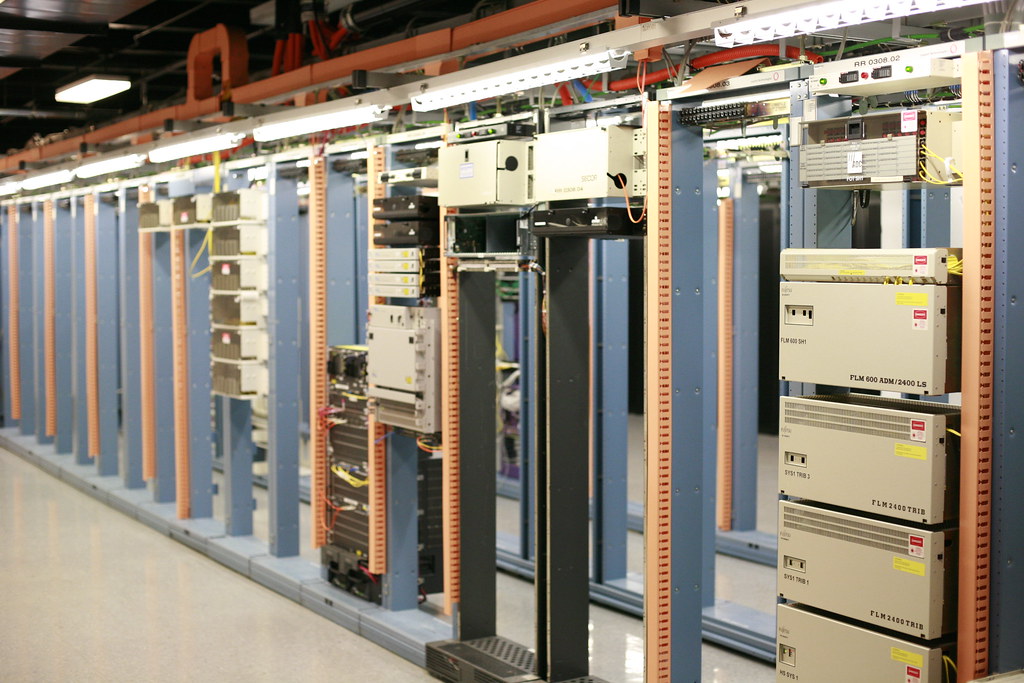
AI-specific processors like Google's Tensor Processing Units (TPUs) and NVIDIA's Tensor Core architecture are designed from the ground up for the matrix multiplications that neural networks depend on. They apply lower-precision number formats (such as INT8 and FP16) to reduce memory bandwidth requirements without meaningfully degrading model accuracy. The practical effect is faster training runs and lower energy costs per computation — which matters enormously when a single large model training run can consume as much electricity as dozens of households use in a year.
Alongside purpose-built chips, edge computing is reshaping where inference happens. Running AI on the device rather than routing data to a remote server eliminates network latency and keeps sensitive data local. This is why modern smartphones can run speech recognition and image classification offline, and why industrial sensors can flag equipment anomalies in real time without depending on a cloud round-trip. The compute is moving closer to where the data originates, which expands the range of environments where AI can operate reliably.
Cloud providers are extending this in the other direction — offering access to massive accelerator clusters that smaller organizations couldn't build themselves, lowering the barrier to training large models while shifting the infrastructure cost to a consumption model.
From Tools to Agents: Autonomous AI Systems
A chatbot responds to prompts. An agent acts on goals. The distinction sounds subtle but has significant practical consequences for how AI gets deployed in organizations.
Agentic AI systems can chain multiple steps together — searching for information, calling external tools, writing code, executing it, and adjusting based on results — without a human confirming each action. Robotic process automation has existed for years, but earlier RPA systems followed rigid, hand-coded workflows. What's new is coupling that automation with models that can reason about ambiguous situations, handle exceptions, and adapt when the expected path doesn't work.
For enterprises, this shifts AI from an assistant that speeds up individual tasks to infrastructure that can handle multi-step business processes. The implications run in both directions: autonomous decision-making reduces the cognitive load on human workers but also raises accountability questions when something goes wrong. This is partly why agentic AI is developing in parallel with governance tooling — the more autonomy a system has, the more important it becomes to audit what it actually did and why.
Generative AI: A General-Purpose Capability
Generative AI entered public awareness through text — large language models that produce human-like writing, answer questions, and assist with code. But the underlying capability is broader than any single medium.
The same generative approach that produces text can produce images (DALL·E, Midjourney), video (tools like Runway ML), audio, 3D models, and even molecular structures for drug discovery. In each case, the model learns the statistical structure of its training domain and can produce new instances that conform to that structure. This makes generative AI a general-purpose capability layered across many different application domains rather than a single product category.
One of the more surprising application areas is scientific research. AI systems are now being used to predict protein folding, assist with the design of genetic constructs, and accelerate analysis of biological datasets. These are domains where the pattern-recognition capabilities of large models turn out to be directly applicable to problems that were previously limited by human time and attention.
The challenges generative AI introduces are also general-purpose: questions of copyright when models are trained on human-authored work, accuracy and hallucination when models produce plausible-sounding but incorrect information, and bias when training datasets contain historical inequities. These challenges don't have clean technical solutions yet, which is part of why governance frameworks are developing alongside the technology.
Multimodal Models and Retrieval-Augmented Generation
Two architectural developments are addressing the two biggest weaknesses of early language models: limited input channels, and knowledge that stales the moment training ends.
Multimodal models process more than one data type simultaneously. A model like Google DeepMind's Gato can handle text, images, and structured tasks within the same framework, shifting between them based on the input it receives. In practical applications this means a single model can describe what it sees in a medical image, answer a question about it in natural language, and flag findings against a reference database — work that previously required separate specialized systems coordinated by hand.
Retrieval-augmented generation (RAG) addresses the knowledge boundary problem differently. Instead of baking all world knowledge into model weights during training, RAG systems retrieve relevant documents or records at inference time and use them to ground the model's response. This means the model's answers can reflect information that postdates its training cutoff, and the retrieved sources can be audited — which matters in settings like legal research or medical information where traceability is important.
Together, multimodal capability and retrieval grounding expand both what AI can perceive and how reliably it can reason about what it finds.
Where AI Is Landing: Industry Applications
The most visible dimension of AI's current trajectory is the breadth of industries it's entering in substantive ways.
In healthcare, wearable devices now monitor vitals continuously and flag anomalies before they become emergencies. Predictive models analyze population-level data to identify patients at elevated risk for specific conditions. Digital twin models of organs are being used to simulate how a patient might respond to a treatment before it's administered.
In financial services, AI fraud detection systems analyze transaction patterns in real time, flagging suspicious activity at a scale and speed that rule-based systems can't match. Reinforcement learning approaches are being applied to portfolio management and risk modeling, where the decision space is too complex for hand-coded rules.
In manufacturing, the dominant use case is predictive maintenance: analyzing sensor data from equipment to predict failures before they happen, rather than waiting for something to break. Collaborative robots (cobots) equipped with reinforcement learning can adapt their movements in response to the humans working alongside them, making the human-robot interface more flexible.
In retail, computer vision is being applied to inventory management — tracking stock levels without manual counts — while recommendation engines use purchase and browsing history to personalize the customer experience at scale.
What these applications share is a shift from AI as an experimental capability to AI as operational infrastructure. The question is no longer whether AI can be useful in a domain but how to deploy it reliably.
Governance, Explainability, and the Trust Problem
As AI systems make consequential decisions — about creditworthiness, medical risk, fraud flags, hiring — the demand for accountability grows. This is the governance challenge, and it's not primarily a technical problem.
The EU AI Act represents the most comprehensive regulatory framework to date, categorizing AI systems by risk level and imposing corresponding requirements around transparency, human oversight, and documentation. Similar thinking is shaping regulations in other jurisdictions. These frameworks push in the same direction: organizations need to be able to explain what a model does, demonstrate that it performs fairly across different populations, and show who is responsible when it doesn't.
The technical side of this is explainability research — methods for making AI decisions interpretable. Classic "black box" models optimize for accuracy and treat internal reasoning as irrelevant. Explainable AI approaches surface the features or reasoning paths that drove a particular output, so users and auditors can understand and challenge it. This is especially important in regulated domains where a decision must be justifiable under law.
Bias mitigation is closely connected. AI systems trained on historical data tend to replicate historical inequities unless that data is audited and corrective techniques applied during training and evaluation. The Amazon hiring tool case — where a model trained on historical hiring data systematically disadvantaged women's applications — has become the canonical example of what happens when this step is skipped.
Democratizing Machine Learning Through AutoML
Not every organization that wants to use AI has the resources to train large models from scratch. Automated machine learning (AutoML) addresses this by automating the most technically demanding parts of the model-building process: selecting algorithms, tuning hyperparameters, and evaluating candidates against each other. Platforms from Google, Microsoft, and AWS expose these capabilities through interfaces accessible to practitioners without deep ML expertise.
Pre-trained models that can be fine-tuned on smaller domain-specific datasets extend this further, allowing organizations to benefit from large-scale training they couldn't afford on their own. The tradeoff is vendor dependence — an organization that builds on a single platform's tools becomes reliant on that platform's pricing and roadmap — and cost unpredictability at scale, where usage-based pricing can become expensive quickly.
These trends don't exist in sequence. They're developing in parallel, with progress in one area creating conditions for progress in others. Better hardware makes larger models tractable; larger models enable agentic applications; agentic applications raise governance demands; governance demands shape how models are designed and documented. The pattern is less a list of independent developments than a self-reinforcing system — which is the most useful frame for understanding where AI is heading and why.